Galaxy: A Cloud Platform for Biomedical Data Analysis
Galaxy is a cloud-based platform used in biomedical research. In biomedicine, researchers often work with very large datasets, especially in areas like genomics, transcriptomics, proteomics, and medical research. These datasets can be difficult to analyze on a normal computer, so cloud platforms can make the work much easier.
The scientific article used is The Galaxy platform for accessible, reproducible, and collaborative data analyses: 2024 update, published in Nucleic Acids Research. This article explains how Galaxy has grown into a global platform that allows researchers to analyze biomedical data using a web browser.
What is Galaxy?
Galaxy is an open-source, web-based platform for scientific data analysis. I allows researchers to upload data, select analysis tools, run workflows, and share their results.
One of the most interesting parts is that users do not need to be expert programmers to use it. Many bioinformatics tools usually require programming experience, but Galaxy provides a graphical interface. This makes advanced biomedical analysis more accessible to students, researchers, and laboratories that may not have a strong computing background.
Galaxy can be used through public servers such as Galaxy Europe. This means that many users can run analyses online without having to build their own computing infrastructure.

Why is cloud computing useful in biomedicine?
Cloud computing is useful in biomedicine because biomedical data is often very large and complex. For example, sequencing a human genome can produce many files that require strong computational resources. Instead of running everything locally on a personal computer, cloud platforms allow users to use remote servers. This has several advantages:
- The user does not need a powerful computer.
- The tools are already installed and maintained.
- Workflows can be saved and repeated.
- Results can be shared with other researchers.
- The same analysis can be reproduced later.
Example of use in biomedical research
A common example of Galaxy use is the analysis of RNA-seq data. Researchers can use it to compare which genes are more active in one condition than another, for example between healthy tissue and cancer tissue.
A simplified workflow in Galaxy could look like this:
- Upload raw sequencing files.
- Check the quality of the data.
- Remove low-quality reads.
- Align the reads to a reference genome.
- Count how many reads map to each gene.
- Compare gene expression between samples.
- Visualize and interpret the results.
The important point is that all these steps can be connected into a workflow. Once the workflow is created, it can be reused with other datasets.
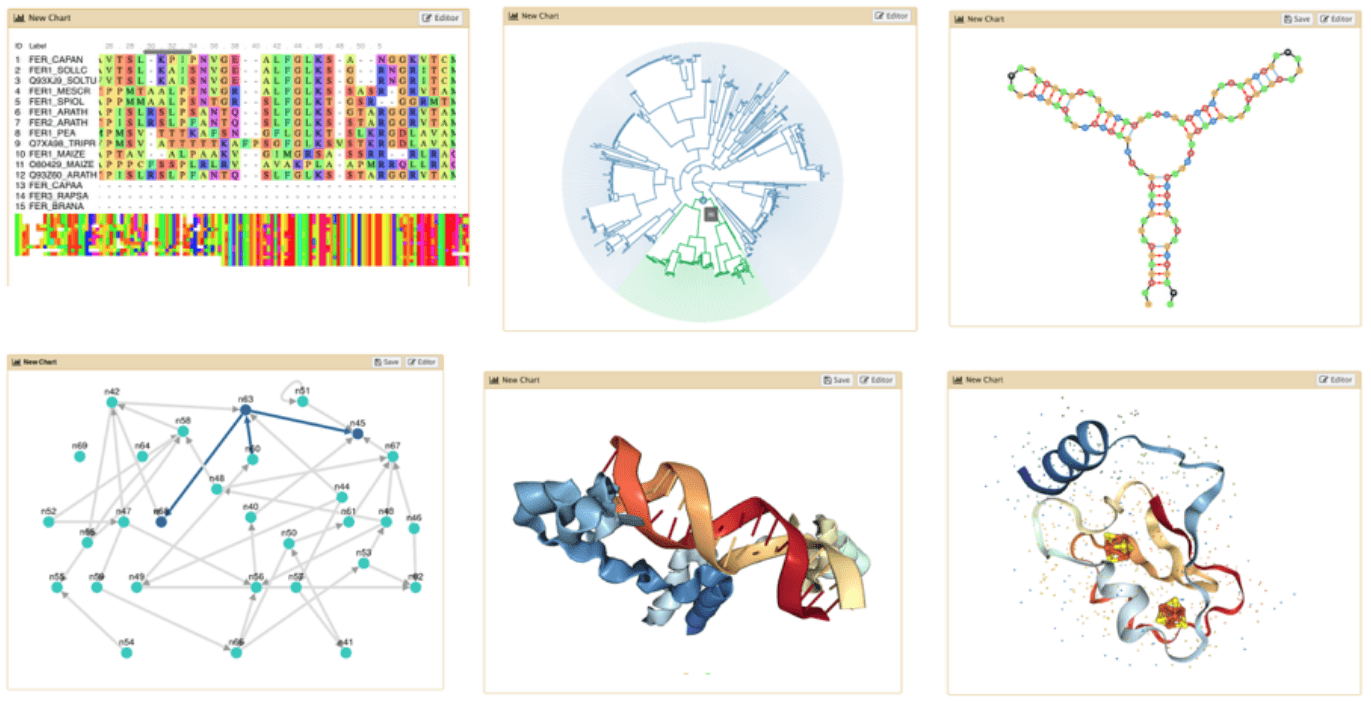
Main benefits of Galaxy
In my opinion, the main benefit of Galaxy is that it makes biomedical data analysis more accessible. A researcher who understands biology but is not an expert in programming can still perform complex analyses. Another important benefit is collaboration, becasue Galaxy allows users to share workflows, histories, and results. This is very useful in research groups, because different people can check what was done and continue working from the same analysis.